Little Farm Story: Idle Tycoon
- 4.2
- Rating
- 10.00M
- Installs
- Free
- Price

 Analysis by App-foxy
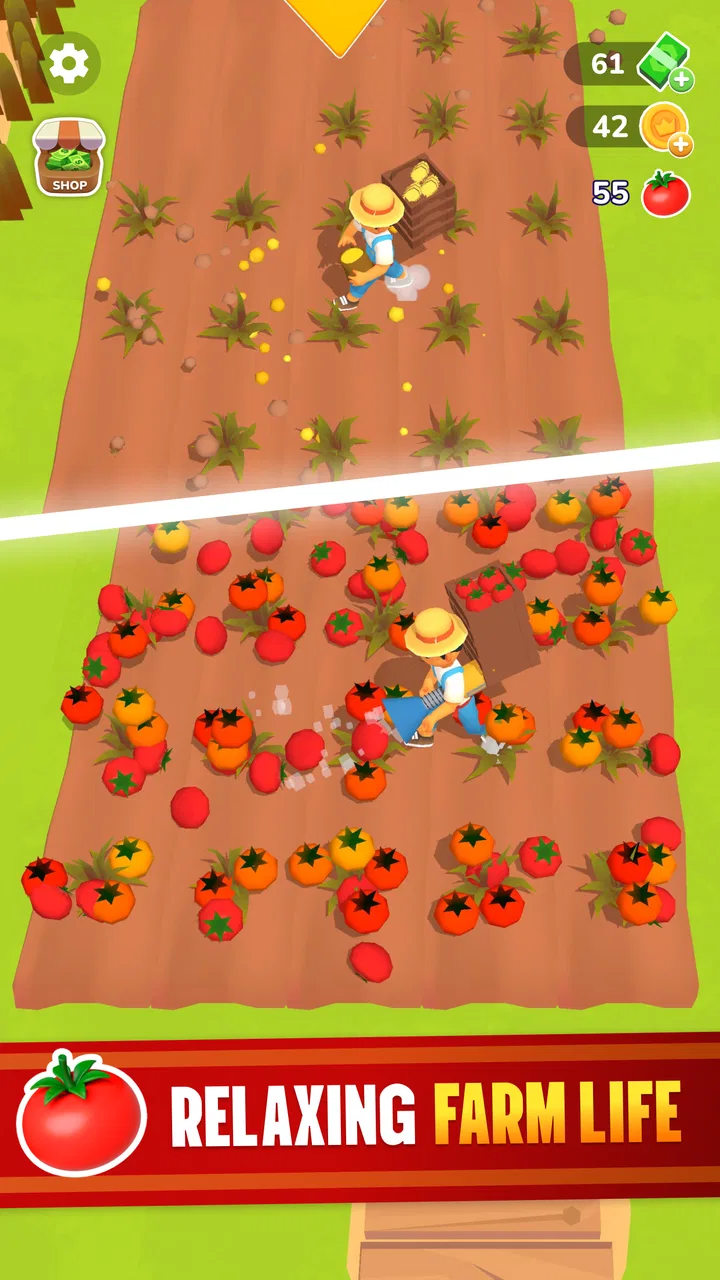
I went into Little Farm Story: Idle Tycoon expecting a light farming game, but its real appeal is the steady feeling of turning a modest plot into a more capable little business. It sits in the role-playing category while borrowing the relaxed rhythm of an idle management game: grow, collect, improve, and check how much further the farm can go. That combination makes it easy to understand within a few minutes, yet there is enough forward movement to give short sessions a purpose.
My first impression was that this is designed for players who like visible progress without having to learn a complicated economy. The farm gives you a clear starting point, and each improvement feels connected to the next practical goal. You are not dropped into a huge world with a long list of instructions. Instead, the game encourages you to focus on the next useful step, which is exactly what makes it comfortable to play while waiting for a bus, taking a short break, or winding down in the evening.
How the farm turns small goals into a routine
I find the farm easiest to enjoy when I treat each visit as a small, self-contained task rather than something that needs constant attention. That gives the steady crop-and-upgrade loop room to feel satisfying without letting it dictate the day. It also makes the next question practical: how to keep that routine comfortable when more than one person uses the same device.
You May Also Like

 AccuWeather: Weather Radar
AccuWeather Review: A Quick, Clear Forecast for Everyday Decisions
For everyday plans, the best forecast is the one you can understand quickly. AccuWeather makes rain timing, radar, and local conditions easy to act on, with a few trade-offs.

 Hill Climb Racing
Why Hill Climb Racing Still Turns Crashes Into One More Run
A tiny car, a bumpy hill and one more upgrade: Hill Climb Racing keeps resurfacing because its simple chaos makes every near-miss feel personal.

 AliExpress - Shopping App
AliExpress Makes Global Shopping Feel Personal, but Shoppers Bear the Risk
AliExpress turns a global marketplace into a pocket-sized discovery engine. Its reach is useful, its shopping loop compelling, and its trade-offs easy to miss.

 Lords Mobile: Kingdom Wars
Lords Mobile Is a Kingdom-Building Routine, Not a Quick Match
A case-by-case verdict on the building, battles, device demands, and social commitments that make Lords Mobile rewarding for some players and exhausting for others.

 PDF Scanner app - TapScanner
TapScanner Makes Paperwork Easier to Capture, Check, and Share
TapScanner makes scanning with a phone feel less like a rescue operation and more like a dependable step in getting work done. Its capture tools are useful, though not flawless.

 Block Blast!
 Shows How Much a Puzzle Game Can Leave Out
A quiet grid game shows why puzzle players increasingly value instant clarity, repeatable skill and low-pressure play—and where the genre still needs to catch up.
More From Our News Desk
View All News


The opening works because the goals are easy to read
The early part of the experience is built around familiar farming actions. You grow crops, collect the results, and use that progress to manage a more productive operation. I appreciated that the basic loop does not need much explanation. Even if you have never played an idle tycoon game before, the relationship between work and reward is immediately understandable.
That simplicity is more important than it sounds. A farming game can become tiring when it throws too many resources, menus, or upgrade paths at you before you understand why they matter. Here, the early goals feel close enough to reach that I rarely felt lost. The next improvement is usually more motivating than an abstract long-term target because it gives each short session a concrete reason.
The first useful habit is to avoid treating every available action as equally urgent. I found the game more satisfying when I concentrated on the improvement that would make the next collection cycle feel better, rather than spreading attention across every option. That approach also helps reveal how the farm’s economy is paced. You begin to notice which actions are genuine progress and which ones are mainly there to tempt you into spending resources too quickly.
For a casual player, this makes the opening welcoming. For an experienced tycoon fan, it may feel familiar rather than surprising. The game is not trying to overwhelm you with a deep simulation of agriculture. Its focus is the pleasant rhythm of building a small operation and watching it become more efficient.
Progress feels strongest when you check in with a plan
The idle structure gives the farm a useful sense of continuity. You can make progress through repeated cycles instead of needing to remain in the game constantly. I like that this supports two different play styles: you can actively manage the farm for a short burst, or return later to collect what has accumulated and decide what deserves attention next.
A realistic everyday use case is a ten-minute break during a busy day. I can open the game, collect the available output, make one sensible improvement, and leave without feeling that I have missed a complicated event or needed to commit to a long session. That makes it a better fit for fragmented time than role-playing games that depend on lengthy battles or uninterrupted quests.
The trade-off is that idle progress can make the game feel less demanding. When the best decision is simply to wait for another cycle, the player’s role becomes more about timing and prioritization than constant problem-solving. That is not a flaw for everyone. It is the central promise of this kind of game, but anyone looking for a hands-on farming simulator should understand the difference before downloading it.
One practical tip is to treat each return to the farm as a small review of your priorities. Rather than immediately tapping through everything, I first look at what has accumulated, then decide whether the next improvement will speed up future progress or merely provide a short-lived boost. This keeps the loop from becoming a string of automatic taps and gives the management side more weight.
Unlocks provide direction, even when the routine stays familiar
The satisfaction here comes less from discovering a dramatic story twist and more from seeing the farm’s scope expand through continued improvement. New goals and upgrades give the routine a reason to continue. Every step is a signal that the previous work mattered, which is essential in an idle game where individual actions can otherwise feel very small.
I found it helpful to judge an unlock by what it changes in my routine, not just by how attractive it looks on screen. If an improvement helps the farm produce or develop more smoothly, it affects future decisions. If it mainly feels like a decorative milestone, it can still be pleasant, but it does not change the strategy as much. This distinction matters because it prevents the progression from feeling deeper than it really is.
The game’s strongest progression moments are the ones that shorten the distance between one meaningful goal and the next. When an upgrade lets me return sooner with enough resources for another improvement, the farm feels alive and responsive. When progress slows into repeated collection without a clear new decision, the experience becomes more passive.
That is why I would recommend setting a personal stopping point for each session. For example, I might decide to play until I can afford one planned improvement, then close the game. This keeps the game from turning into an endless search for the next tiny reward and makes the progress feel intentional rather than compulsive.
The challenge is mainly about patience and choices
Little Farm Story: Idle Tycoon does not present itself as a demanding strategy challenge. Its difficulty curve is gentler, and the pressure comes from deciding how long to wait, what to improve first, and whether a faster route is worth using. That makes the game accessible, but it also means the challenge may not satisfy players who want difficult puzzles, complex production chains, or serious economic consequences.
In my experience, the most noticeable difficulty is pacing. Early progress feels generous because each improvement arrives quickly and confirms that the farm is moving in the right direction. Later, the same loop can require more patience. That slower rhythm is normal for idle tycoon games, but it changes the mood from discovery to maintenance. Players who enjoy gradual accumulation will probably accept that transition; players who need frequent surprises may lose interest.
The best way to handle the slower sections is to avoid measuring success only by how much you can unlock in one sitting. I pay more attention to whether my current choice improves the next few cycles. That mindset makes the game feel like a series of manageable decisions instead of a race toward a distant finish.
There is also a useful difference between difficulty and friction. A difficult game asks you to solve a demanding problem. A slower idle game asks you to wait or return later. Those experiences can feel similar when progress stalls, but they are not equally engaging. Here, the friction is more likely to come from the pace of accumulation than from a lack of understanding. If you want challenge through skill, this is probably not the right farming game for you.
Where the free-to-play rhythm can affect enjoyment
The game is free to play, which makes it easy to try without committing money at the start. It includes in-app purchases ranging from $1.99 to $199.99 per item. That range is worth considering before you become invested in the farm, especially because idle games naturally create moments when you want to speed up a process or reach an upgrade sooner.
I do not think spending is necessary to understand the core loop, but the presence of purchases can change how the pacing feels. A wait that seemed acceptable at the beginning may feel more noticeable after you have seen ways to accelerate progress. My advice is to decide early whether you are treating the game as a relaxed free experience or as a hobby where optional spending is part of the appeal. Mixing those expectations can lead to frustration.
For families, the Everyone content rating makes the game approachable from an age-classification perspective. Even so, I would still keep purchase controls in mind on a shared device. The rating tells you about suitability, not about how a player may respond to optional purchases or repeated progress prompts.
Another point is that idle design can encourage frequent checking. I found the game most enjoyable when I opened it at times I had already chosen, rather than feeling that every completed cycle demanded immediate attention. That small boundary keeps the farm relaxing. Without it, the same progress signals that make the game satisfying can start to feel like reminders rather than invitations.
What keeps the loop going, and what may make you leave
The main retention strength is clarity. I usually know what I am working toward, and the farm provides enough feedback to show whether my decisions are helping. That makes it easy to return after a break because I do not have to reconstruct a complicated plan from memory.
The weaker side is variety. The basic farming-and-management loop is pleasant, but its appeal depends on how much you enjoy repetition with gradual improvement. If you need a strong narrative, character relationships, tactical combat, or a constantly changing map, this game may feel too narrow. It uses role-playing language through progression and development, but it is not the same kind of experience as a story-heavy role-playing adventure.
Compared with a traditional farming simulator, this is lighter and more convenient. You spend less time dealing with detailed schedules, spatial planning, or demanding daily routines. Compared with a standard idle tycoon game, the farming theme gives the numbers a warmer context: crops and a growing homestead are easier to connect with than an abstract business dashboard. The compromise is that players who want detailed agriculture or deep business modeling will find both alternatives more substantial.
I also think it works better as a companion game than as a single all-day activity. A short visit has a clear beginning and end. A long session can expose the limited nature of the loop because the most satisfying actions are tied to waiting and accumulation. That is a useful distinction when deciding whether to install it: it is strongest as a calm progress game, not as a full-time simulation.
Device expectations and practical setup
The game supports devices running Android 8.0 or later, so it is aimed at a broad range of Android hardware rather than only the newest phones. In practical terms, I would still make sure the device has enough free storage and that notifications are configured to your preference, because idle games are more enjoyable when they fit naturally into your routine instead of interrupting it.
SayGames Ltd is the developer behind the title, and the current version is 1.14.0. The game was released on March 22, 2024, so it has had time to establish itself beyond a brand-new launch window. Its audience is also substantial: it has passed 10 million installs, with an average rating of 4.2 from around 136 thousand ratings and roughly 2.4 thousand written reviews. Those figures suggest that the straightforward farming loop has reached a wide audience, although popularity should not be confused with depth.
I would especially recommend trying it on a device where you are comfortable with short, repeated sessions. It is not the kind of game I would choose when I want to sit down for a single long campaign with a definite ending. It fits better beside a daily routine, where a few minutes of attention can still produce a visible change on the farm.
Who should play it and who should skip it
I would recommend it to someone who likes watching a small project grow, enjoys simple upgrade decisions, and wants a role-playing-flavored game that does not demand constant concentration. It is also a good choice for players who have irregular free time. The farm gives you something to do in a short session, but it does not punish you for putting the phone away.
It is less suitable for anyone seeking a demanding management simulation. If you want complex crop economics, deep resource chains, precise seasonal planning, or a strong story, you will probably prefer a more traditional farming title. Likewise, if your favorite role-playing games depend on combat strategy and character builds, the gentle farm progression may feel too limited.
Players who dislike waiting should approach it carefully. The game’s long-term appeal depends on accepting that improvement happens in stages. You can make smart choices, but you cannot turn a relaxed idle structure into a fast action game. The question is not whether the pacing is objectively slow; it is whether that pace matches what you want from a mobile game.
My verdict on the progression
After spending time with it, I see Little Farm Story: Idle Tycoon as a friendly, accessible farming idle game whose best feature is the clarity of its progress. The early goals are easy to understand, the farm gives useful signals when an upgrade matters, and the gentle difficulty curve makes it comfortable for casual play. I particularly like the way it turns a few minutes into a complete mini-session rather than requiring a major time commitment.
Its limitations are just as clear. The core routine can become repetitive, the challenge is based more on patience than mastery, and the free-to-play structure may make slower stretches more noticeable. Optional purchases priced from $1.99 to $199.99 per item also mean that players should decide their spending boundaries before the desire to accelerate progress takes over.
My final recommendation is simple: try it if you want a calm farm that steadily becomes more capable, and skip it if you need constant novelty or deep simulation. The progression works best when you treat the farm as a relaxing routine, not a race. With that expectation, the game delivers a pleasant sense of growth and enough short-term goals to make returning feel worthwhile.
FAQs for Little Farm Story: Idle Tycoon
01What is Little Farm Story: Idle Tycoon?
Little Farm Story: Idle Tycoon is an engaging farming simulation game available on Android and iOS. Players can manage their own farm, grow crops, raise animals, and expand their agricultural empire. The game combines elements of strategy and idle gameplay, allowing players to progress even when they are offline.
02How does the idle gameplay feature work in Little Farm Story: Idle Tycoon?
The idle gameplay feature in Little Farm Story: Idle Tycoon allows players to continue earning resources and making progress even when they are not actively playing. Your farm will keep producing crops and generating income, which you can collect the next time you log in. This feature is perfect for players with busy schedules.
03Are there in-app purchases in Little Farm Story: Idle Tycoon?
Yes, Little Farm Story: Idle Tycoon offers in-app purchases that allow players to buy virtual currency and items to speed up their progress. While the game can be enjoyed without spending real money, these purchases can enhance the gaming experience by unlocking special features or reducing wait times.
04What are the main features of Little Farm Story: Idle Tycoon?
The main features of Little Farm Story: Idle Tycoon include managing and expanding your farm, growing a variety of crops, raising different animals, and selling produce to earn income. The game also features beautiful graphics, a user-friendly interface, and strategic elements that challenge players to optimize their farm operations.
05Is Little Farm Story: Idle Tycoon suitable for all ages?
Little Farm Story: Idle Tycoon is designed to be family-friendly and is suitable for players of all ages. The game’s simple controls and colorful graphics make it accessible for younger players, while the strategic elements provide depth and challenge for older players. Parents can feel confident allowing their children to enjoy this game.
Pros
- Engaging idle mechanics keep you playing.
- Charming graphics and animations.
- Frequent in-game events and updates.
- Simple and intuitive controls.
- Offline progression is available.
Cons
- In-app purchases can be pricey.
- Ads can interrupt gameplay.
- Limited customization options.
- Requires constant internet for updates.
- Progression can feel slow at times.

Little Farm Story: Idle Tycoon
Gallery